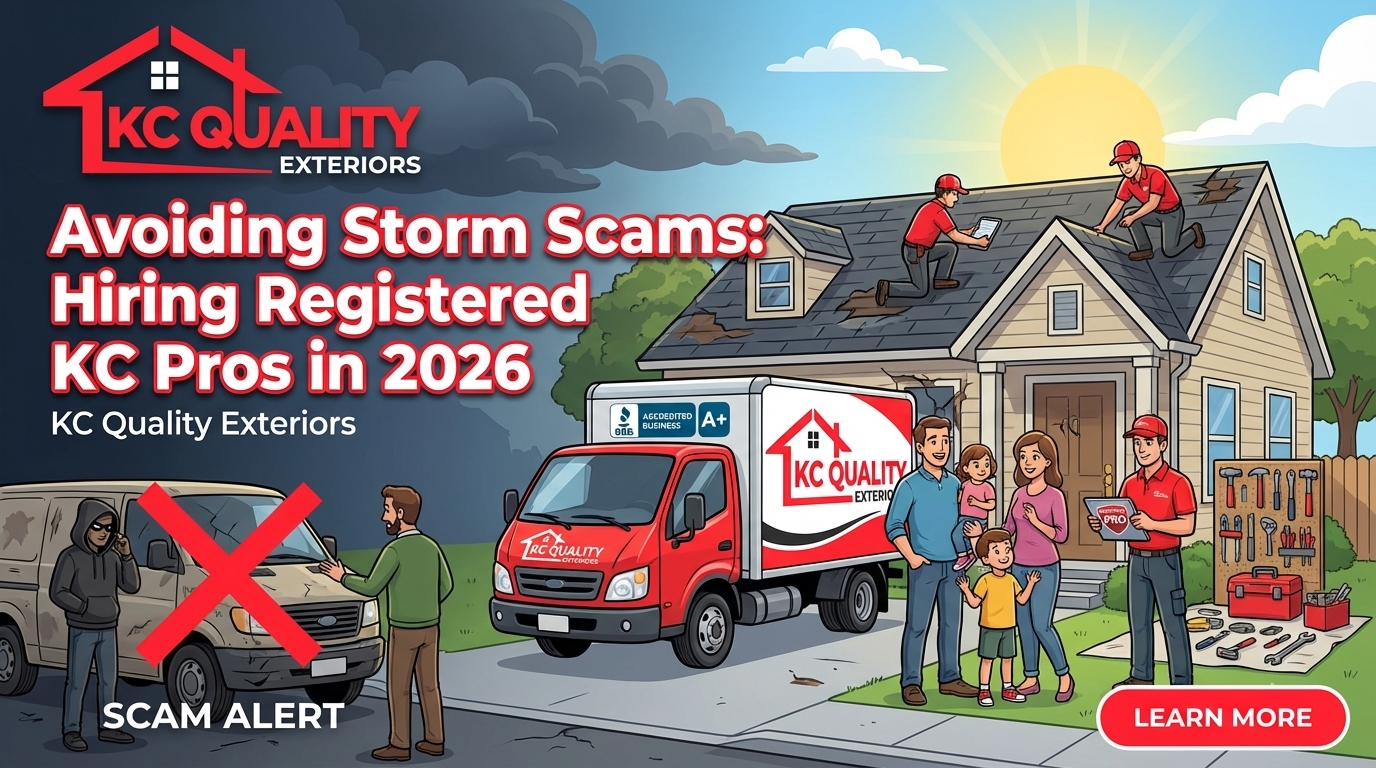
Avoiding Storm Scams: Hiring Registered KC Pros in 2026
Avoiding Storm Scams: How to Hire Registered KC Pros in 2026
Kansas City is no stranger to volatile weather. In 2025, the metro area saw a record-shattering year for storm-related property damage, with insurance claims totaling an estimated $879 million. As we move into 2026, the aftermath of these storms continues to attract "storm chasers"—unscrupulous, out-of-state contractors who follow hailstorms like vultures, looking for quick payouts from unsuspecting homeowners. Knowing how to navigate this landscape isn't just about getting a new roof; it’s about protecting your financial future and ensuring your home remains a safe haven.
To avoid storm scams in Kansas City, homeowners must verify a contractor’s registration via the Kansas Roofing Contractor Registration Act (KRCRA) or Missouri business filings, refuse to pay large sums upfront, and reject any offers to "waive" insurance deductibles, which is illegal. Always prioritize local, established pros with verifiable physical addresses in the KC metro.
1. The 2026 Kansas City Storm Landscape: Why Scams are on the Rise
The sheer volume of storm activity in the midwest over the last 18 months has created a "perfect storm" for fraudulent activity. When high-wind events and heavy hail hit high-density areas like Overland Park, Lee's Summit, or Liberty, the local demand for roofing and siding services immediately outstrips the supply of reputable contractors. This gap is precisely where scammers thrive. They know that homeowners are stressed, perhaps dealing with active leaks, and are desperate for a quick fix.
The Economic Incentive for Fraud
In 2026, the cost of building materials like asphalt shingles and fiber cement siding has stabilized but remains high. Scammers exploit this by offering "2024 prices" or claiming they have leftover materials from a nearby job. These tactics are designed to bypass your logical defenses. By understanding that $879M in claims was paid out locally last year, you can see why out-of-state operations are willing to drive hundreds of miles to knock on your door.
The Shift in Consumer Vulnerability
With interest rates and inflation remaining key concerns for KC families, the temptation of a "free roof" or a "waived deductible" is stronger than ever. However, these offers are almost always a gateway to insurance fraud or sub-standard work that fails within two years. A storm scam doesn't just cost you your deductible; it can lead to denied future insurance claims if the work wasn't performed to code or if the contractor was unlicensed.
2. Anatomy of a Storm Chaser: Identifying Red Flags Before You Open the Door
The first line of defense against a scam is your front door. Storm chasers are masters of psychological sales. They often appear professional, wearing branded polos and carrying high-tech tablets, but their business model is built on volume, not quality. In 2026, many of these operations have become more sophisticated, using localized phone numbers and temporary office spaces to appear "local."
The Pressure of the "Today Only" Offer
One of the most common red flags is the high-pressure sales tactic. If a contractor tells you that their crew is "just around the corner" and can only offer a specific price if you sign a contract right now, walk away. Professional KC contractors like KC Quality Exteriors provide detailed inspections and allow you time to review the proposal and speak with your insurance adjuster.
Unmarked Vehicles and Out-of-State Plates
Always look at the street before you sign. Are they driving a truck with permanent local graphics, or is it a white van with a magnetic sign? While some legitimate local startups may have modest equipment, the combination of out-of-state license plates and temporary signage is a hallmark of a fly-by-night operation that will be in a different state by the time your roof starts leaking in six months.
3. State-Specific Verification: Navigating Kansas and Missouri Registration Requirements
Hiring in the Kansas City metro is unique because you must navigate the laws of two different states. A contractor who is legal to work in Jackson County, MO, might be operating illegally if they cross the state line into Johnson County, KS, without the proper registration. In 2026, enforcement of these regulations has tightened significantly to protect homeowners.
The Kansas Roofing Contractor Registration Act (KRCRA)
In Kansas, every roofing contractor is required by law to register with the Kansas Attorney General’s office. This isn't just a suggestion; it’s a requirement for pulling permits in cities like Olathe or Shawnee. When vetting a pro, ask for their KRCRA number. You can verify this status instantly on the Kansas Attorney General's official website. If they aren't on that list, they are not a registered pro.
Missouri Requirements and Consumer Protection
Missouri does not currently have a statewide roofing-specific license like Kansas, but they do have strict business registration and consumer protection laws. A legitimate Missouri contractor should have a registered business with the Secretary of State and a valid certificate of insurance. Furthermore, many cities on the Missouri side, such as Kansas City (KCMO) and Blue Springs, have their own local licensing and bonding requirements that must be met before a permit is issued.
4. The 'Registered Pro' Checklist: 5 Things Every KC Contractor Must Provide
Don't take a contractor's word for it. In 2026, documentation is your best friend. A "Registered Pro" in the KC area will have a pre-prepared packet ready for you that includes all the following items. If they hesitate to provide these, it's time to find a new contractor.
Certificate of Insurance (COI): This must show both General Liability (to protect your home) and Workers’ Compensation (to protect you from being sued if a worker is injured).
Physical Business Address: A P.O. Box is not an address. You want to see a local office where you can go if there is a problem.
Itemized Written Estimate: Avoid "lump sum" quotes. You need to see exactly what you are paying for, including the brand of shingles, underlayment types, and flashing details.
Local References from 2025-2026: Ask for names and addresses of homeowners in your specific neighborhood who had work done recently.
Manufacturer Certifications: Pros should be certified by brands like GAF, Owens Corning, or James Hardie, which allows them to offer extended warranties that uncertified scammers cannot.
5. Insurance 101: How to Work with Adjusters and Avoid Deductible Fraud
Insurance fraud is a major focus for Missouri and Kansas lawmakers in 2026. One of the most common scams involves the contractor offering to "cover," "waive," or "rebate" your insurance deductible. While this sounds like a great deal, it is actually a form of insurance fraud. The deductible is the portion of the claim that you, the policyholder, are legally responsible for paying.
The Dangers of Deductible "Waivers"
If a contractor waives your $1,000 deductible, they are likely submitting a false invoice to the insurance company stating that they charged the full amount. In many jurisdictions, this is a felony. Furthermore, if a contractor is willing to cheat an insurance company, they are certainly willing to cheat you by cutting corners on your roof installation to make up that $1,000 difference.
Never Sign Over the Full Check
A massive red flag is a contractor demanding that you sign over the entire insurance check before work begins. A standard, ethical payment schedule usually involves a small deposit for materials once they arrive on-site, with the final balance due only after the job is completed and has passed inspection. Keep control of the funds to ensure the work is finished to your satisfaction.
6. Modern Scams in 2026: Guarding Against AI and Digital Fraud Tactics
As technology evolves, so do the scammers. In 2026, we are seeing a rise in "digital storm chasing." This involves using sophisticated tools to trick homeowners who might be more tech-savvy but are unaware of these specific digital pitfalls. At KC Quality Exteriors, we believe in using technology for transparency, but homeowners must be wary of its misuse.
AI-Generated Damage Reports
Some predatory contractors are now using AI-image generation to "enhance" drone photos of your roof. They might show you a tablet screen with clear hail dents that aren't actually there on your real roof. Always ask to see the raw, unedited photos, or better yet, have a reputable local pro perform a physical inspection where they can show you the damage in person.
Deepfake and Spoofed Communications
Be cautious of emails or texts that appear to come from your insurance carrier or a "government storm relief agency." Scammers use these to phish for your policy details or to "pre-approve" you for a contractor that they just happen to represent. Always contact your insurance agent directly using the number on your official policy documents before sharing any information online.
7. The Safe Hiring Workflow: From Emergency Tarping to Final Inspection
If a storm hits tonight, do you know the steps to take? Following a logical workflow ensures that you don't make an emotional decision under duress. The most important thing to remember is that you usually have time. Unless you have water pouring into your living room, most storm damage can wait a few days while you vet the right company.
Step 1: Mitigation and Tarping
If your roof is leaking, you have a duty to prevent further damage. You can hire a contractor for *only* emergency tarping. A reputable pro will charge a flat fee for this service and will not require you to sign a full roof replacement contract just to put a tarp down. This buys you time to research and get multiple estimates.
Step 2: The Multi-Estimate Rule
Even if you love the first contractor you meet, get at least two or three estimates. In the 2026 KC market, this helps you understand the fair market value of the repairs. If one estimate is significantly lower than the others, it's usually because they are using inferior materials or lack proper insurance coverage.
8. KC Homeowner Resources: Verified Directories and Consumer Protection Hotlines
You don't have to navigate this alone. Several organizations in the Kansas City area are dedicated to keeping homeowners safe from fraud. Before you sign any contract for roofing, siding, or windows, consult these resources to ensure your contractor is who they say they are.
KS Attorney General Roofing contractor registration database (KRCRA). MO Attorney General Consumer complaint history and fraud alerts. BBB of Greater KC Letter grades and verified customer reviews. RSRA Roofing & Solar Reform Alliance—identifying ethical contractors.
The Value of Local Knowledge
Local pros like KC Quality Exteriors understand the specific building codes for various KC municipalities. We know how to work with local insurance adjusters who live and work in the same neighborhoods we do. This localized accountability is something a storm chaser simply cannot offer. When you hire local, you are investing back into the Kansas City community.
Ready to Get Started?
KC Quality Exteriors helps homeowners and property managers protect what matters most with dependable roofing, siding, and window solutions across the Kansas City metro.